

Haskell Welcomes World Cup Visitors With Stories of Stewardship
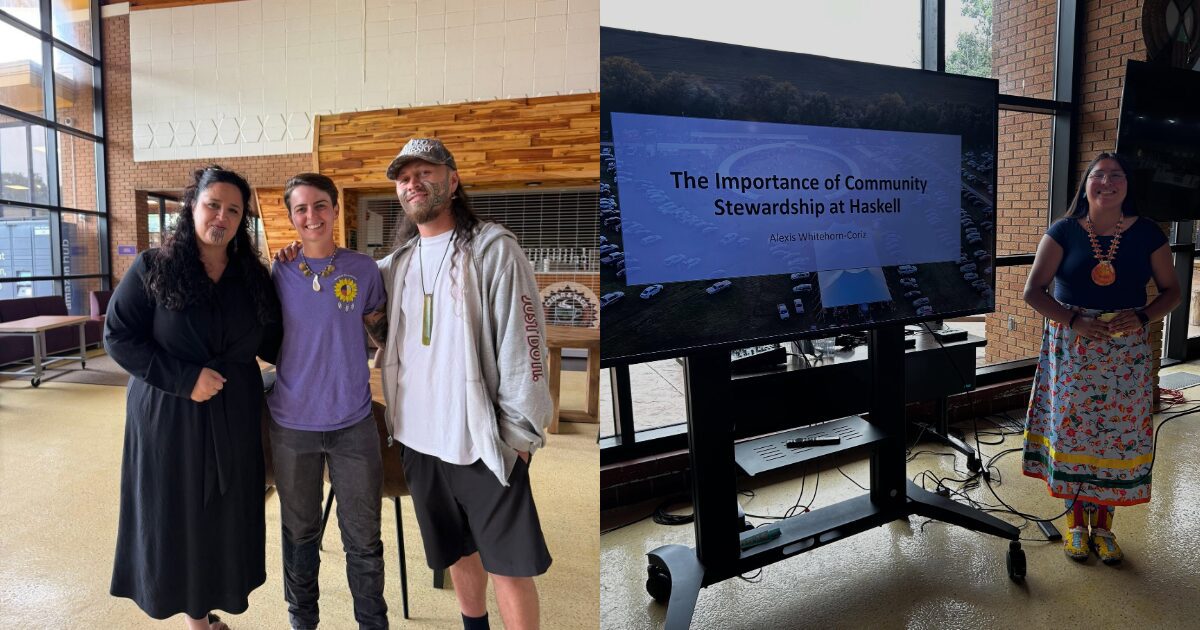
This summer, Haskell Indian Nations University’s Friday Facts series brought Indigenous voices to the forefront during the 2026 FIFA World Cup. Presentations explored stewardship in different, but intertwined perspectives—caring for the community and the land. Alexis Whitehorn-Coriz, a Spring 2026 graduate, and Courtney King, Program Land and Stewardship Manager, presented on their purview offering visitors a deeper understanding of Haskell’s history, mission, and values. These presentations allowed students, faculty, and alumni to highlight the important pieces of Haskell—the people, the history, and the determination to protect this space.
When it comes to stewardship—community and land—everyone has a role to play, Whitehorn-Coriz explained. Haskell students travel to campus at a turning point in their lives as they pursue higher education. As Haskell has a unique and diverse student population, with over 150 federally recognized tribal affiliations represented, community is integral in student success. It’s important for Haskell students and faculty to share our stories with an international audience because being able to represent themselves, their tribe, and the university on an international level allows a light to be shed on the growing success the university is experiencing–both academically and as a community.
Reflecting on her own involvement across campus groups—from volunteering at campus events or working with the Haskell Greenhouse—Whitehorn-Coriz understands firsthand the importance community involvement.
“I want to inspire others through my work to join groups on campus to strengthen the Haskell community, or in their home communities, in their own fashion,” she shared.
While Whitehorn-Coriz focused on relationships between people, Courtney King invited audiences to consider another form of stewardship—the relationship between Indigenous people and the land. Presenting on the histories, cultures, and ecologies of the land Haskell resides on and the greater Wakarusa River Valley, King aimed to continue the conversation she has on campus everyday—these lands are sacred.
“I feel a sense of duty to tell these (hi)stories and uplift the thousands of years of Indigenous Knowledges and relational and reciprocal connections to these lands and waters.” King shared, “Through this renewal of knowledges, we also teach about and actively care for the many beings who still inhabit the ecosystems at Haskell Indian Nations University.”
Following King’s presentation, a Māori visitor from Aotearoa (New Zealand) shared that many of the same systems affecting Haskell’s homelands have also impacted Māori communities—acting as a uniting force to advocate and care for, preserve, and protect lands, waters, and Indigenous cultures worldwide.
For both speakers, sharing Haskell’s story with an international audience offered the opportunity to expand attendees’ understanding of the university, while sharing experiences that resonate across Indigenous communities worldwide. Together, the presentations exemplified that stewardship at Haskell is inseparable from both community and place. The Friday Facts series offered visitors a deeper understanding of Haskell’s mission and values that continue to shape the university today.
Finally, King shared, “Anyone can be in relationship with these lands if they open their hearts and minds to her many teachings.”