

Dr. Dan Wildcat named the UMKC Alumni Association’s Spotlight Award recipient
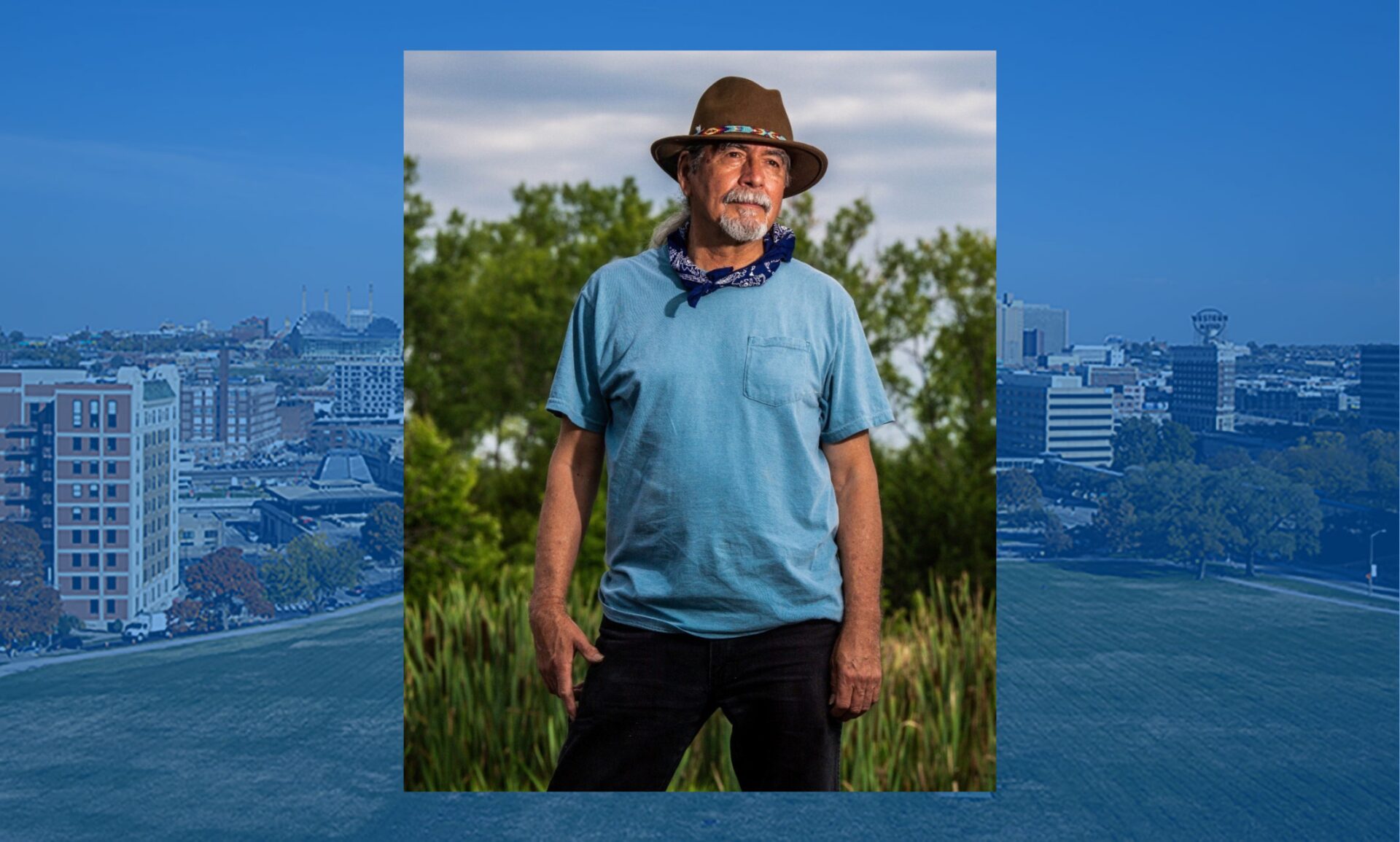
For nearly four decades, Daniel Wildcat, Ph.D., has dedicated his career to advancing Indigenous education, environmental research and cross-cultural collaboration. A professor at Haskell Indian Nations University in Lawrence, Kansas, Wildcat is an internationally respected scholar whose work explores the intersection of Indigenous knowledge, climate science, public policy and education.
Wildcat, a Yuchi member of the Muscogee Nation of Oklahoma, said his teaching and research journey was shaped by recognizing the deep connection between Indigenous identity and the natural environment.
“Once I started teaching at Haskell, I began to really recognize that for American Indians and Alaska Natives, their tribal cultures and identities were inseparable from the natural environments they called home,” Wildcat said. “Indigenous tribal knowledges and wisdom offered real insight into the challenges humankind faces today, especially in ecology, environmental science and global climate change.”
Wildcat founded the Haskell Environmental Research Studies Center in partnership with Kansas State University’s Center for Hazardous Substance Research, creating research opportunities for tribal colleges and advancing environmental science initiatives that directly benefit Indigenous communities.
His leadership extends to national and international climate initiatives. Wildcat helped form the American Indian and Alaska Native Climate Change Working Group, a tribal college-centered network addressing climate change challenges. He also played a key role in organizing the Planning for Seven Generations climate conference and serves as a leader in the National Science Foundation-funded Rising Voices, Changing Coasts Research Hub, one of the largest NSF awards ever received by a tribal college.
“Leading the Rising Voices, Changing Coasts Hub fulfills my desire to see Indigenous knowledge and methodologies recognized as science,” Wildcat said. “It opens humanity’s understanding of the world in ways Indigenous worldviews compel us to consider.”
Wildcat is also a prolific author and thought leader. His books, including “Red Alert! Saving the Planet with Indigenous Knowledge” and “On Indigenuity: Learning the Lessons of Mother Earth,” demonstrate the need for Indigenous perspectives in addressing global environmental challenges and advancing sustainable solutions.
Throughout his career, Wildcat has built strong partnerships across tribal, academic and federal institutions. He credits relationship-building and trust as central to his work.
“Success builds at the speed of trust,” Wildcat said. “Creating spaces where people can share knowledge and collaborate is essential to addressing complex challenges like climate change.”
Wildcat’s commitment to mentoring students and supporting Indigenous youth remains a defining part of his legacy.
“Youth are hungry for meaningful relationships and determined to make the world a better place,” Wildcat said. “Sometimes the best thing we can do is give them the tools, knowledge and wisdom to be creative, then stand back and support them as they lead.”
Wildcat earned his doctoral degree from the Henry W. Bloch School of Management, where he said the interdisciplinary learning environment strengthened his leadership approach and commitment to public service.
“The Bloch School helped deepen my awareness of my strengths and weaknesses as a leader and reinforced the critical importance of public service and policy-making,” Wildcat said.
Reflecting on his career and impact, Wildcat hopes his legacy centers on service, collaboration and care for future generations.
“Maybe they will say he was a good relative, a mature human being and he tried to lead with love in everything he did,” Wildcat said.