

Institutional Learning Outcomes
Institutional learning outcomes (ILOs) describe the knowledge, skills, abilities, and knowledge that Haskell Indian Nations University envisions for all students, regardless of major, as a result of completing their education. More information can be found in HINU’s Institutional Learning Outcomes breakdown: Academic Unit Program Learning Outcomes
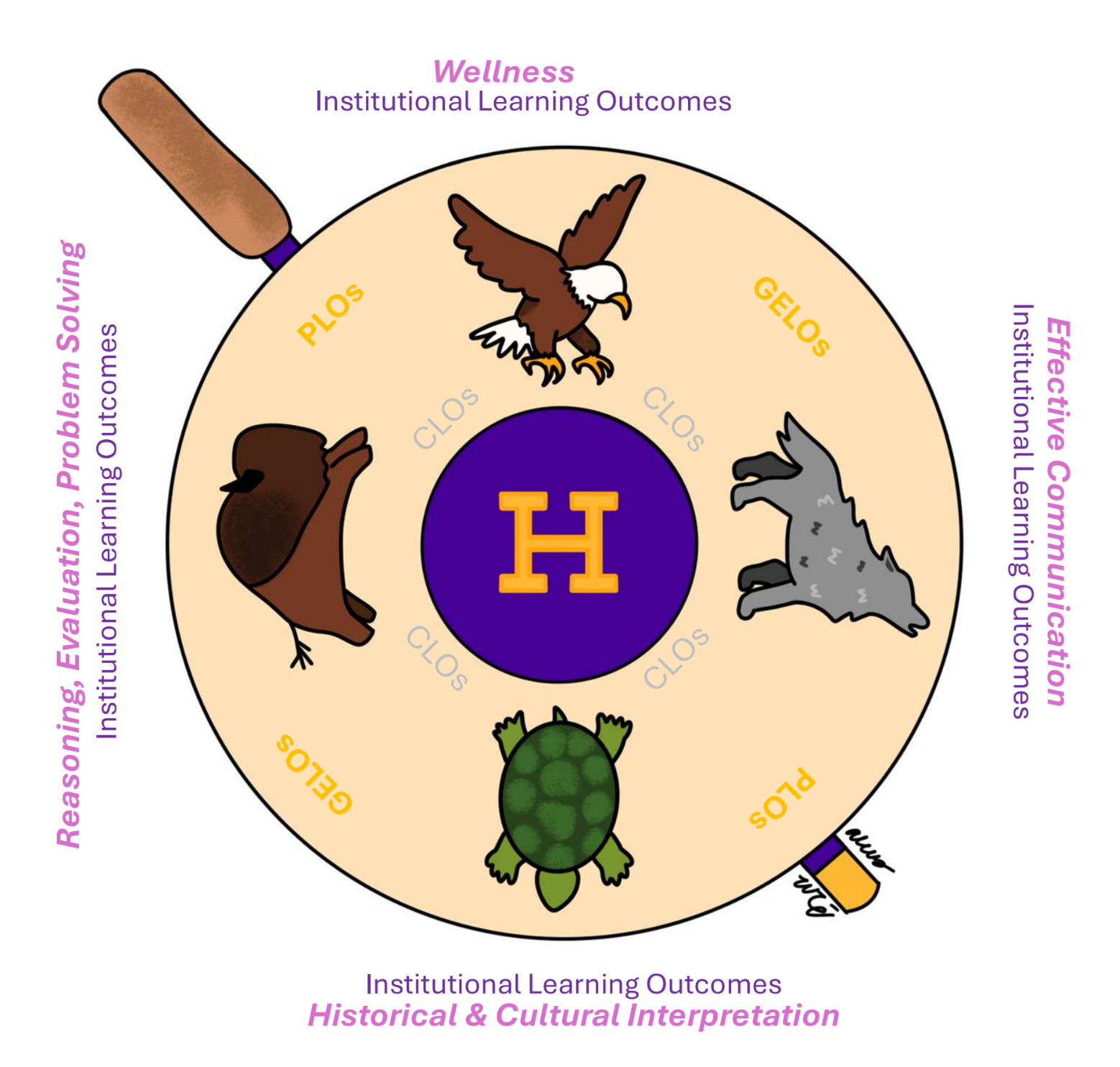
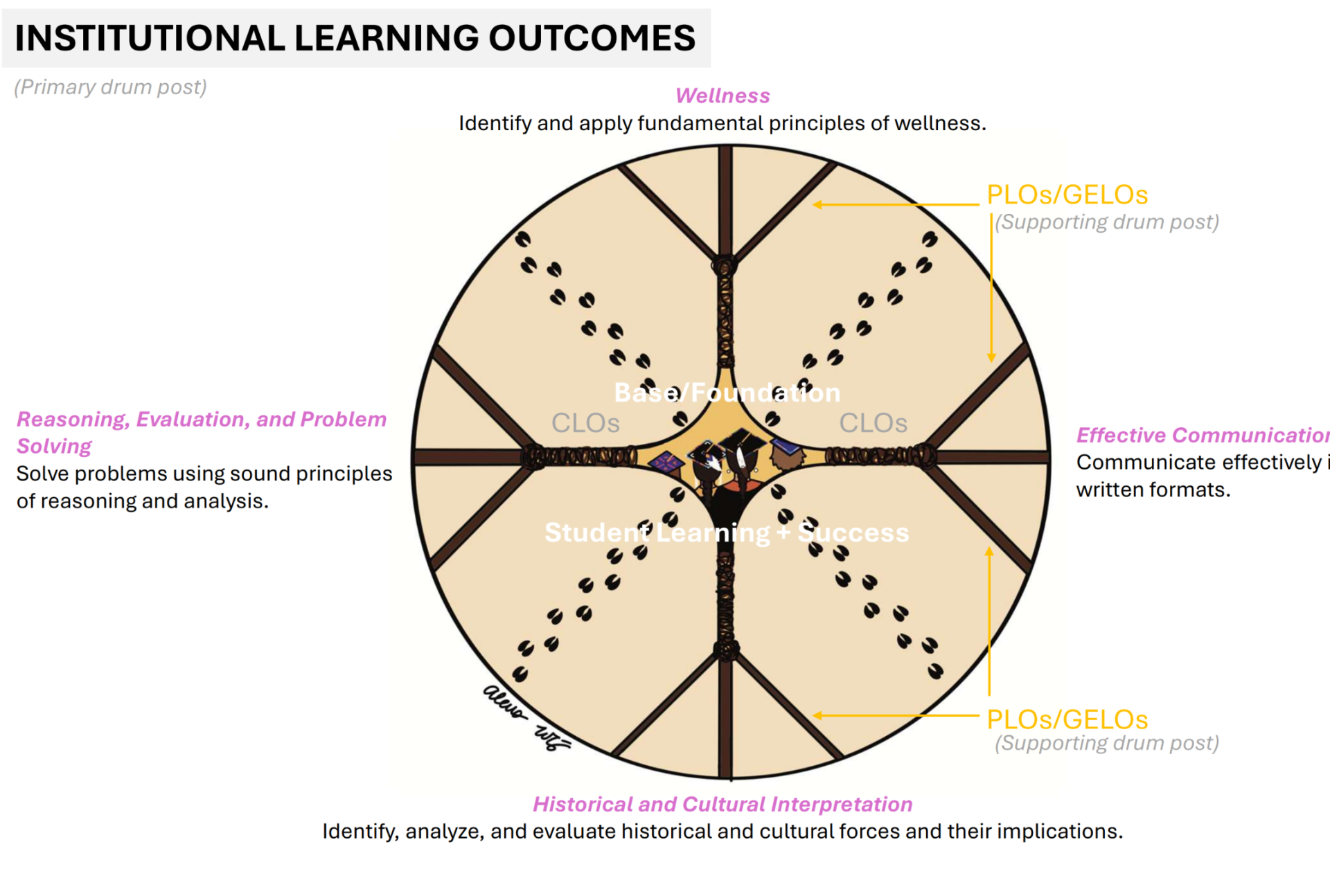
Drum Framework Explained:
The HINU Assessment Committee recognized the importance of making assessment meaningful and visually representing the connections among student learning, academic programs, administrative units, services, and all of our campus faculty and staff that move our mission forward.
As an intertribal institution of learning with a vibrant campus community, Haskell brings together students, faculty, staff, and communities representing many American Indian and Alaska Native Tribal Nations, cultures, and traditions. In developing this framework, the HINU Assessment Committee wanted a symbol that could reflect this shared learning community while honoring this diversity. The drum emerged as a meaningful metaphor for these intertribal qualities in our campus culture. Although drums and their traditions vary, as a central symbol of our assessment framework, it offers a way to represent diverse peoples and Nations coming together, interconnected, and helping us move Haskell’s legacy forward in a good way.
At the heart of the drum are our students. They are the heartbeat and core purpose for the work we do. Surrounding and supporting them are Haskell’s learning outcomes, programs, services, faculty, staff, leadership, and more. Like the interconnected parts of a drum, as well as the interconnected ways that drums bring people together through ceremony and social events, the drum represents the ongoing movement of being together in place. As Wildcat and Deloria remind us, the power and place produce personality, and Haskell is a special place with a vibrant and diverse community. The drum helps us capture that in a good way, and a
lso helps us connect the work we do and the data we collect be considered in a more holistic manner because Haskell is a place of learning where students can develop their leadership skills academically, culturally, intellectually, and holistically.
Assessment is critical for us to take seriously as we endeavor to create a culture of ongoing learning and improvement. This practice helps us understand how well these pieces are working together and where we can become stronger – for our students and their futures. Through assessment, reflection, learning, and continuous improvement, we strengthen the environment that supports student learning and success and advances Haskell’s mission of building the leadership capacity of our students.
This document reflects current language as of April 2026 and is managed by the Office of the Vice President of Academic Affairs.